Authenticity Is the New ROI: Why the Era of 'Sanitized' Marketing Is Dead
Date:
November 6, 2026
Author:
Priyadarshini Basu

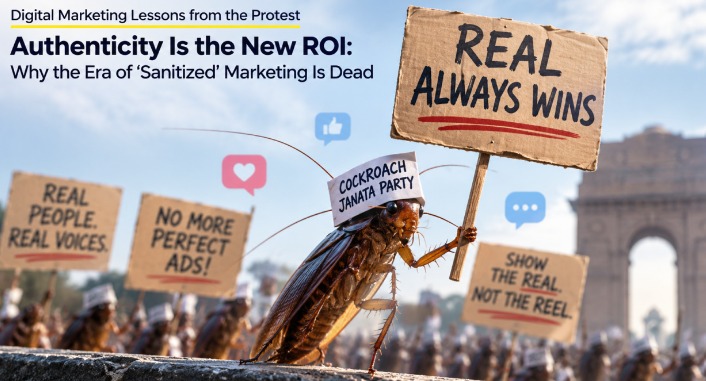



The recent student protests across India have served as a masterclass in the raw, unfiltered power of digital mobilization. As we observe the landscape, it’s impossible to ignore how context-driven communication—when executed with authenticity—can bypass traditional noise and resonate at a visceral level.
For those of us in the digital agency space, these events offer profound lessons that transcend political discourse and touch upon the core mechanics of effective influence. If we are to advise our clients on how to build meaningful digital footprints, we must shift our perspective:
1. Context is the Only Currency: The most effective content during these protests wasn't polished high-budget production; it was raw, timely, and deeply contextual. It spoke to the immediate anxieties and aspirations of the audience. For brands, the lesson is clear: stop pushing generic, sanitized campaigns. If your content doesn't acknowledge the "now"—the cultural and social pulse of your audience—it will be ignored.
2. The "Meme-ification" of Messaging: Memes, short-form videos, and stark, powerful imagery have become the primary vehicles for complex ideas. They act as "digital shorthand" that allows a message to be understood, shared, and replicated in seconds. We need to help our clients embrace this brevity. It isn't about "dumbing down" the message; it's about respecting the audience's time and desire for impact.

How social media and big data are changing the game of…
Sumit Jain 7 years ago

Companies with Solid Business Models can weather the…
Shiv Shankar Devaraaj 6 years ago
Dare To Win- How We did it in PR
Shiv Shankar Devaraaj 7 years ago
3. Authenticity Over Aesthetics: Audiences have developed an incredibly sharp radar for artificiality. The content that gained the most traction felt human. It felt like it came from a person, not a committee. Clients often fear losing control by being "too raw," but in today's digital economy, polished perfection is often mistaken for detachment. Vulnerability and genuine tone are the new hallmarks of credibility.
4. Community-Led Distribution: These movements weren't top-down; they were bottom-up. The content thrived because the community owned the narrative. Instead of just "broadcasting" to a target demographic, brands need to foster ecosystems where their audience feels empowered to become co-creators of the brand story.
As digital leaders, our role is evolving from mere content producers to cultural architects. We aren't just selling products or services; we are helping clients navigate a landscape where relevance is earned through empathy, agility, and the courage to participate in the real, messy, and powerful conversations defining our times.
Let’s stop being afraid of the conversation and start being a part of it.